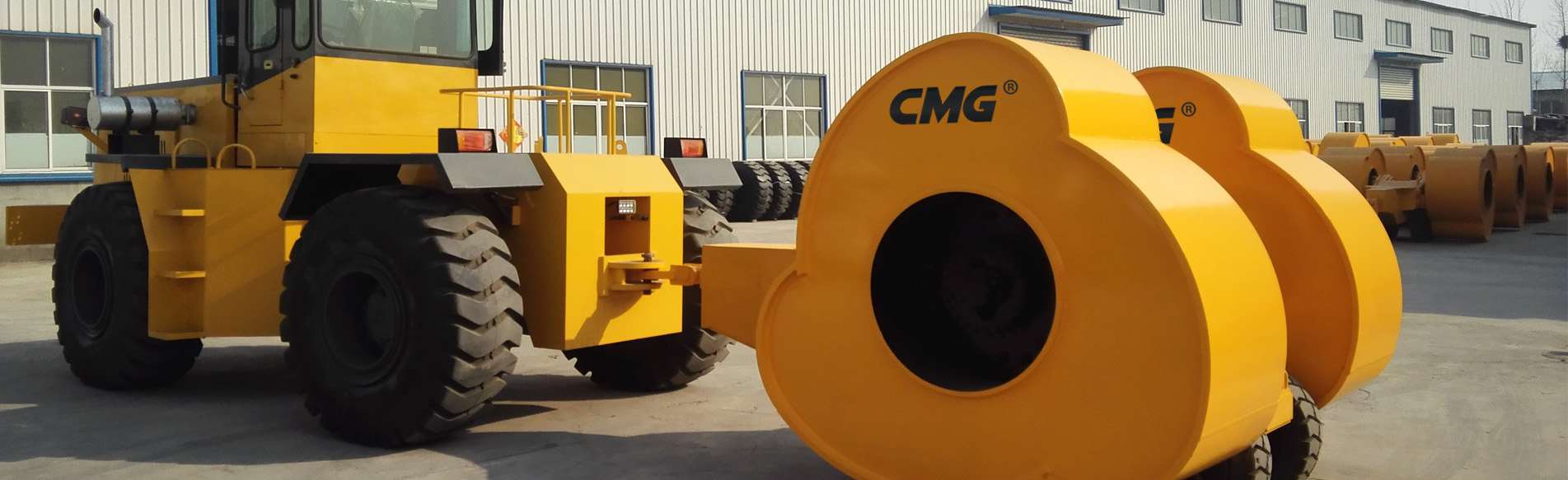
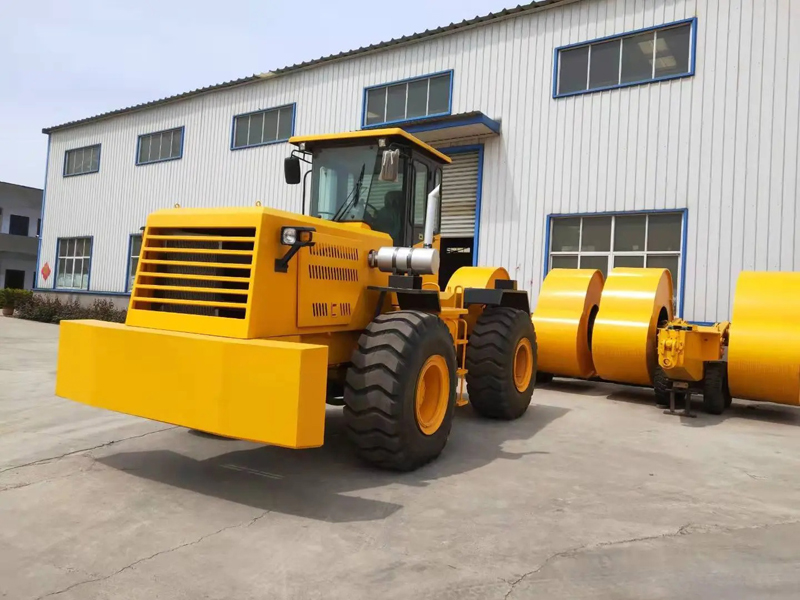
A buyer comparing impact rollers is usually handed a list of numbers: 12 kJ, 25 kJ, 32 kJ, 35 kJ. The numbers look like a performance ranking, with more kilojoules meaning more compaction. They are not a ranking, and treating them as one is how sites end up with a drum that is too heavy for the tractor or too light for the fill.
What the class number means
Nominal impact energy is calculated from drum mass, gravity and the fall height built into the polygon. A three-sided drum falls further than a five-sided drum of the same size, so geometry — not just mass — decides the number. Two drums labelled with the same energy but built on different polygons will not deliver the same blow. That is why the class belongs to a drum type, and why the class alone cannot be compared across manufacturers without the rest of the specification.
The classes and drum data we publish
Each class is a drum, not a tractor: the energy figure follows from drum mass and the polygon geometry, so the model sheet has to be read as a drum sheet. The table below gives the published values for the drums we list. Sets are quoted as a drum plus a matched tractor, and the tractor figures sit on the SD series page.
| Model | Impact energy | Drum shape | Operating weight | Overall dimensions (L × W × H) | Drum width | Tread |
|---|---|---|---|---|---|---|
| SD25T | 25 kJ | 3-sided | 11,600 kg | 3,840 × 2,980 × 2,200 mm | 900 mm | 1,180 mm |
| SD30T | 30 kJ | 3-sided | 16,000 kg | 3,820 × 2,980 × 2,360 mm | 900 mm | 1,180 mm |
| SD32T | 32 kJ | 3-sided | 16,500 kg | 3,880 × 2,980 × 2,480 mm | 900 mm | 1,180 mm |
| SL32T | 32 kJ | 3-sided | 13.6 – 16.5 t | 3,880 × 2,960 × 2,450 mm | 900 mm | 1,160 mm |
| SL35T | 35 kJ | 3-sided | 14.5 – 18 t | 3,880 × 2,960 × 2,580 mm | 900 mm | 1,160 mm |
| 5YCT25 | 25 kJ | 5-sided | 13.8 – 16 t | 3,840 × 2,980 × 2,200 mm | 900 mm | 1,160 mm |
Working values shared by the towed drums
| Working speed | 10 – 15 km/h |
|---|---|
| Gradeability | 25° |
| Compaction achieved | 95 – 98% (method dependent) |
| Minimum turning radius | 5,800 mm on the SL and 5YCT drums; 6,000 mm on the SD drums |
| Damping | Hydraulic, nitrogen, spring and rubber buffers |
| Accumulator pressure | 3 – 4.5 MPa |
| Tyre pressure | 0.6 – 0.8 MPa |
Drum mass moves with the drum shape and with the options fitted — the buffered speed-increasing system and the 930 mm wheel both change the figure — which is why the 25 kJ drum appears above with two different weights. The sheet for the drum you buy is fixed on the quotation drawing. Earlier catalogue designations map onto these models: YCT25 and 6825 are 25 kJ drums, 6830 is the 30 kJ drum and 6832 the 32 kJ drum, and 30D is the 30 kJ drum listed under its older name. Drums of 12, 15, 17 and 20 kJ appear in earlier editions of this site's listings; they are quoted on request, because their drum configuration has to be confirmed rather than assumed.
What actually changes between classes
Going up a class changes four things at once: the mass of the drum, the size of each blow, the tractor needed to tow it at working speed, and the cost of moving it between sites. A larger drum does not simply compact deeper. It also needs more power in front of it, a stronger hitch, and often a different transport arrangement. A 35 kJ drum towed by a tractor that cannot hold speed on wet fill delivers fewer effective blows than a 25 kJ drum on a tractor that can.
Four inputs decide the class
Depth required. If the design asks for improvement well below the placed layer, the class has to be large enough to deliver energy at that depth in the fill concerned. If the requirement is only the upper layer, a large drum is wasted money.
Fill type. Coarse rockfill and mining spoil absorb energy differently from a sandy fill, and a clay matrix responds differently again. The trial section is where this is settled, not the catalogue.
Tractor available. The drum cannot exceed what the site's tractor can pull at working speed. Buying a class above the available tractor is a common and expensive mistake.
Mobility and transport. Width, weight and axle arrangement decide whether the drum can move between plots on its own axle or needs a low-loader each time. On scattered plots this dominates the economics.
How to ask for a quotation
Send the fill type and source, the layer thickness you intend to place, the depth the design requires, the tractor you have or intend to buy, and the acceptance test the engineer will apply. With those five answers the class stops being a guess. Without them, any recommendation is a default, and a default is what a competitor will also quote.
What we need to quote a class
- Fill type, source and any trial data
- Layer thickness and target depth of improvement
- Tractor model, power and hitch
- Site access, transport and number of plots
- Acceptance test and testing frequency
- Programme: area and time available