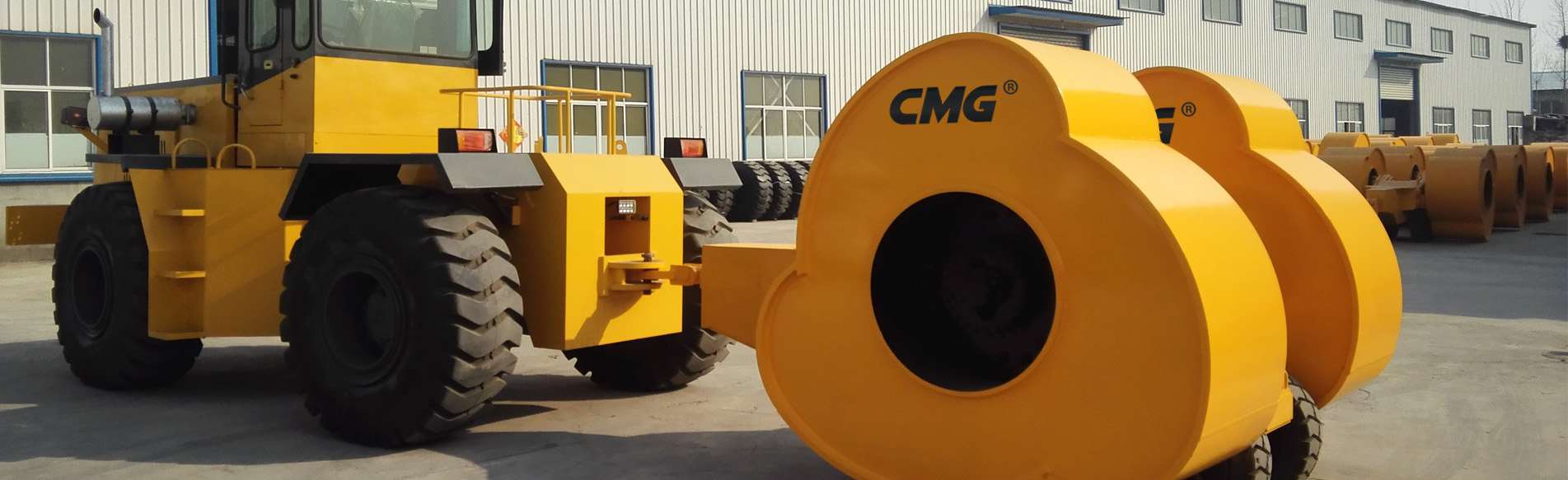
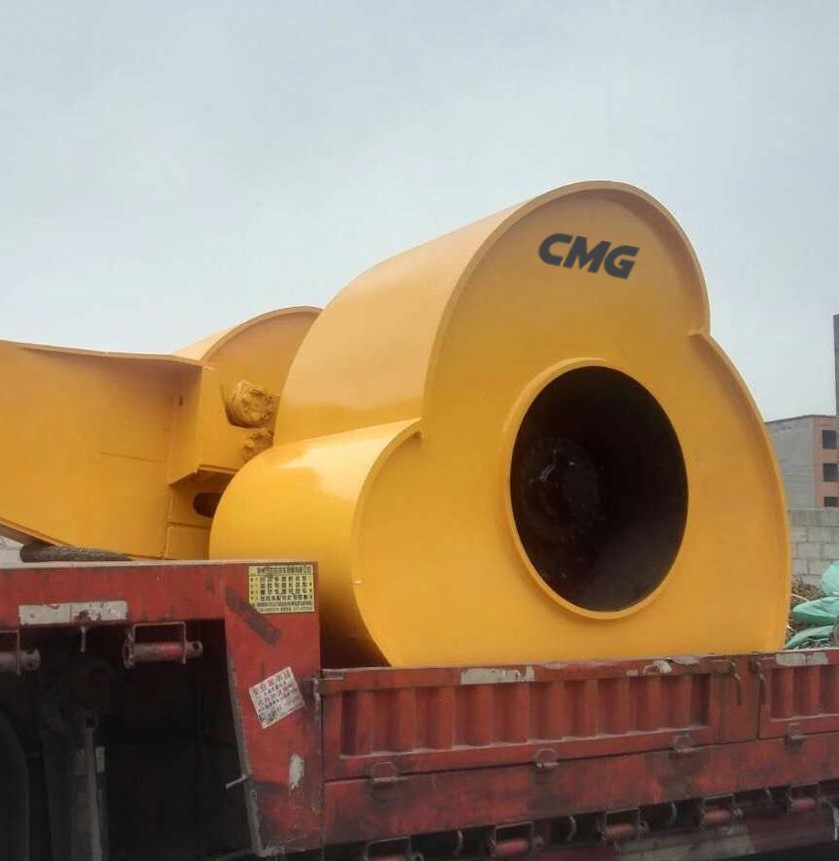
Buyers often meet the three-sided and five-sided impact roller as two products and assume one is an upgrade of the other. They are not. Both are polygonal drums using the same corner-and-face mechanism, and both are towed by a tractor. The difference is the shape of the polygon, and that shape fixes the trade-off between the size of each blow and how often blows arrive.
The geometry, stated plainly
The fall height of a regular polygonal drum is h = R (1 − cos(180°/n)), where R is the circumradius and n the number of sides. Because each revolution delivers n blows and advances roughly one circumference, the side count also sets the blow rate. The table below holds drum mass constant, so it isolates the effect of geometry alone. The energy figures are relative indices, not catalogue values.
| Property | Three-sided | Four-sided | Five-sided |
|---|---|---|---|
| Fall height, as a fraction of R | 0.500 R | 0.293 R | 0.191 R |
| Blows per revolution | 3 | 4 | 5 |
| Nominal energy per blow (index) | 1.00 | 0.59 | 0.38 |
| Energy delivered per revolution (index) | 1.50 | 1.17 | 0.96 |
| Surface disturbance | Highest | Moderate | Lowest |
Read the table in two directions. Per blow, the three-sided drum is strongest by a wide margin. Per revolution, it still leads, because three deep falls deliver more total energy than five shallow ones. What the five-sided drum buys is frequency and evenness: more blows, closer together, with a smaller step for the tractor to pull the drum over.
What that feels like on site
The three-sided drum produces a pronounced wave in front of it, a deeply kneaded surface and strong settlement response. It suits deep, loose or coarse fill where the objective is to reach material that a layer roller cannot, and where the finished surface will be reshaped afterwards anyway. Rockfill, mining spoil, deep uncontrolled fill and reclamation subgrade are its natural applications.
The five-sided drum runs smoother. Individual blows are smaller, the surface is less torn, and the drum is easier to keep at speed behind a lighter tractor. It suits work where the treated surface is closer to the final level, where the fill is moderately thick rather than very deep, and where the same machine has to work near existing infrastructure. Road rehabilitation and large building plots are typical.
A four-sided drum sits between the two and is less common. It is worth considering when a single machine must handle both coarse fill and a reasonably even finish, but it does not match either specialist drum at its own task.
How to decide
Start from the ground, not from the drum. If the problem is depth — deep loose fill, thick rockfill, a compressible layer under the formation — the three-sided drum is usually the right starting point. If the problem is evenness and finish over a moderate thickness, or the site is sensitive to surface disturbance and vibration, the five-sided drum is the better fit. If the fleet already contains one geometry, adding the other is often more useful than adding a second identical unit, because the two cover different ground.
Then check the tow vehicle. The harder the blow and the bigger the step, the more power and ballast the tractor needs to keep the drum rolling at working speed rather than dragging. A drum that cannot be kept at speed delivers fewer blows than its geometry promises, and no amount of passes fixes a tractor that is too small.
What does not change between them
Both geometries need the same things around them: a fill placed at a workable moisture, drainage that lets water out of the treated layer, a trial section to fix the pass count, and a conventional roller afterwards for the finished surface. Both leave a surface that must be reshaped. Both transmit vibration into the ground, so services and structures must be checked before work starts. The side count changes the size of the blow; it does not change the method.
Selection inputs
- Depth of improvement required, and the fill type
- Coarse content: rockfill, cobbles, spoil or uniform fill
- Finish requirement at the treated level
- Tractor power, weight and hitch type
- Proximity of structures, piles and buried services