The question "impact roller or vibratory roller" is usually asked at the wrong level. The two machines do different jobs in an earthworks programme, and most large projects use both. What matters is knowing which job each one is doing, and where the specification requires one rather than the other.
Two different mechanisms
A vibratory roller is a steel drum with an eccentric mass inside it. The drum stays in contact with the ground and oscillates, applying many thousands of cycles per minute to a thin layer. Compaction comes from repeated, low-amplitude dynamic loading plus the static weight of the machine.
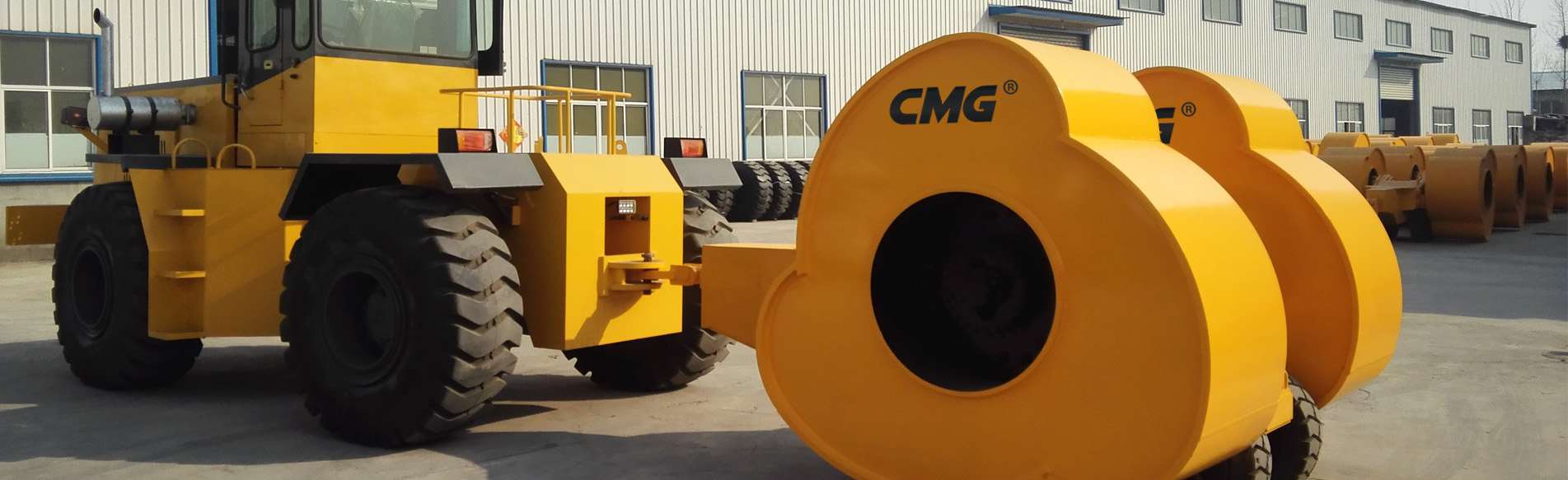
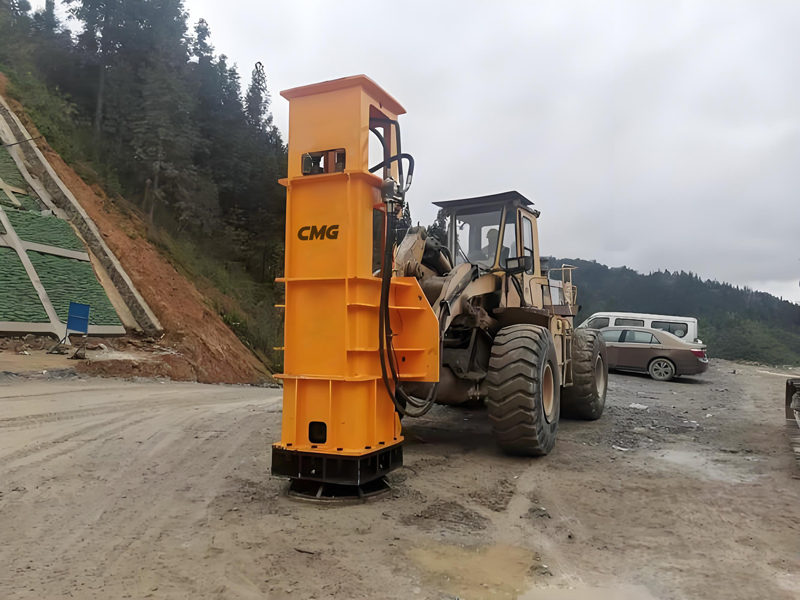
An impact roller is a polygonal drum towed behind a tractor. It has no vibratory mechanism. It lifts its mass over each corner and drops it onto the face, delivering a few large blows per revolution. Compaction comes from discrete high-energy impacts, and the energy reaches further because the blow is larger, not because it repeats faster.
| Characteristic | Vibratory roller | Impact roller |
|---|---|---|
| Loading | Continuous oscillation, small amplitude | Discrete blows, large amplitude |
| Typical role | Layer compaction to a density specification | Deep treatment of a fill mass before layer works |
| Layer control | Strict; performance depends on thin, uniform layers | Works thicker lifts; thickness set by trial |
| Depth reached | Essentially the placed layer | Below the placed layer, into the fill mass |
| Finished surface | Close to final level and texture | Kneaded and uneven; requires reshaping |
| Vibration at distance | Continuous, higher frequency | Intermittent, high energy per event |
| Best ground | Granular and cohesive layers within moisture limits | Loose, deep, coarse, variable or compressible fill |
Depth of influence
A vibratory roller's influence is tied to the layer it is rolling. That is not a weakness; it is how layer works are designed and how density testing is specified. An impact roller's influence is tied to the mass of fill under the drum and can extend well below the placed layer, which is precisely why it is used on deep fill, rockfill and reclamation ground. But depth is not a fixed number for either machine: it depends on soil, moisture, layer thickness, pass count and the energy class. Any comparison that quotes one depth for "an impact roller" is not a comparison, it is a sales claim.
Output and cost
Impact rolling covers large areas quickly because it treats thick lifts and travels fast, and because it does not require the excavate–spread–water–roll cycle at every thin layer. That is its commercial case. The trade-off is that the surface it leaves must be reworked, and that the method only pays when the fill genuinely needs deep treatment. On a well-behaved fill placed in controlled layers, a vibratory roller is cheaper and simpler.
Price per square metre is therefore a poor way to choose. Compare the whole operation: number of layers, water and rework, testing frequency, and the settlement risk carried into the structure if deep fill is left loose.
Vibration and nearby structures
Both machines transmit vibration, but the signature differs. A vibratory roller sends continuous, relatively high-frequency motion; an impact roller sends intermittent high-energy events. Which is more damaging to a particular structure, service or freshly placed concrete cannot be decided from a brochure. It requires a site-specific assessment, usually with vibration monitoring during the first passes.
How they work together
The usual sequence on a large earthworks job is: place the fill in thicker lifts, treat the mass with the impact roller and record settlement, shape and moisture-condition the upper layer, then compact that layer with a vibratory roller to the specified density. The impact roller removes the deep risk; the vibratory roller delivers the surface and the tested layer. Treating them as alternatives usually means either over-specifying the deep treatment or under-specifying the layer.
Decide with these five answers
- What does the specification require: layer density, depth of improvement, or both?
- Is the fill loose and deep, or placed and controlled?
- How much settlement risk is the structure carrying?
- What finish and level does the treated surface need?
- What vibration limits apply to nearby assets?