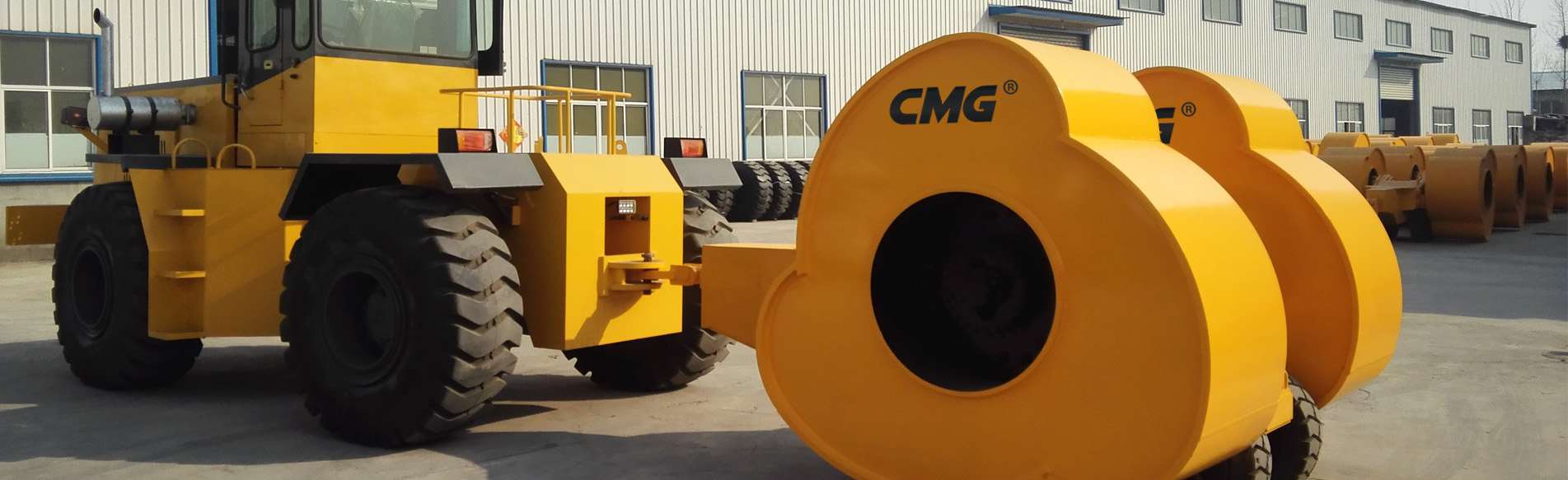
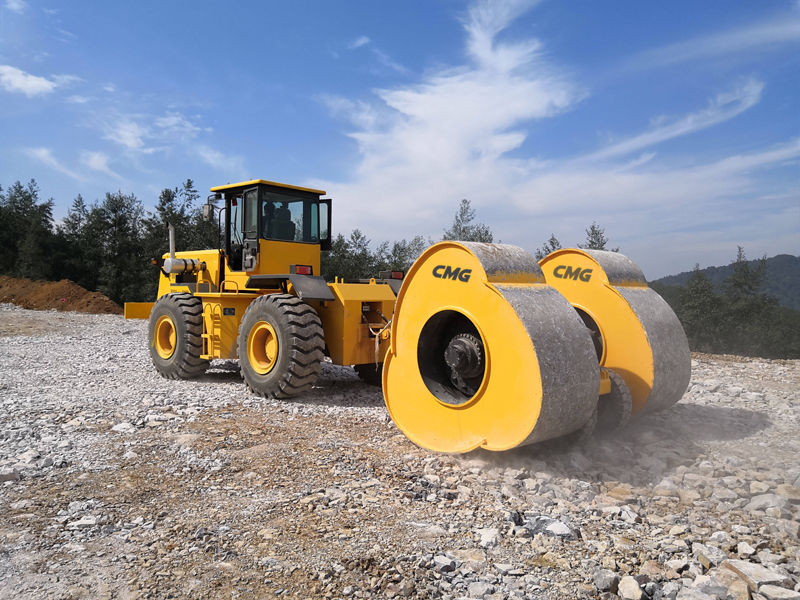
In road construction the impact roller has a specific place in the sequence: below the pavement, on the formation and on the fill that supports it. It is not a substitute for the pavement layer works. Its job is to make sure that the ground under the road has already done most of its settling before the asphalt or concrete goes down.
Where it fits in the programme
Bulk earthworks place the embankment; the formation is trimmed to level; then the pavement layers are built. Impact rolling belongs between the first and second of those steps, and sometimes also on the borrow fill before it is placed. On rehabilitation work it can be used on the existing formation after unsuitable material has been removed, to treat the fill that remains.
Which fill benefits
The method earns its cost on fill that is deep, loose, variable or coarse: cut-to-fill rock, weathered rock, mining spoil, uncontrolled fill under a widened carriageway, and hydraulic or dredged fill on low-lying alignments. It is also used where a fill has been placed in thick lifts and the programme cannot afford to remove and re-lay it. On a clean, well-graded granular fill placed in controlled layers, a conventional roller is usually sufficient and cheaper.
The trial section comes first
Before production begins, run a trial on the actual fill. Place the material at the intended thickness and run a pass pattern with the drum at working speed. Record the surface level after each pass and test at the depth the design requires. The trial answers three questions: is the drum penetrating instead of compacting, is the settlement still changing after the planned number of passes, and what pass count actually achieves the acceptance criterion. Agree that pass count with the engineer and record it.
Pass pattern and coverage
The usual pattern is a grid of parallel runs in one direction, then a second direction across it. Coverage matters more than speed: each drum width must overlap the previous run, and the ends of each run need enough overrun that the turnaround does not leave an untreated patch. Edges, verges and the ground around structures are treated separately, often with a smaller drum or a conventional roller, because the impact drum cannot work tight against a wall or a culvert headwall.
Moisture and drainage
Impact energy compacts a fill that can densify; it does not dry a saturated one. If the fill is wet, blows pump water and disturb the surface instead of densifying it. Before rolling, confirm that the layer drains and that the water table or a perched water layer will not be pushed up into the treated zone. Where the fill is too dry and cohesionless, dust and surface ravelling can limit the effect, and moisture conditioning may be needed.
Interfaces with structures
Bridge abutments, culverts, retaining walls, piles, services and the survey monuments all need to be located before the drum starts. Vibration falls off with distance, but the distance that matters depends on the asset, the ground and the drum class. Where an asset is close, either work away from it, use a lighter drum or a conventional roller, and monitor vibration during the first passes rather than assuming a safe distance.
Testing and records
Acceptance is normally demonstrated with a level survey before and after treatment, density or penetration testing at the specified depths, and proof rolling of the finished formation. Keep a record per plot: fill type and source, layer thickness, drum class, pass pattern and direction, working speed, settlement per pass, test results and date. Those records are the evidence that the formation is consistent, and they let you plan the next section without repeating the trial.
Common mistakes
The recurring failures are not subtle. Rolling too fast, so the drum skips and the blows land unevenly. Rolling fill that is too wet, and calling the resulting rutting "compaction". Skipping the trial and applying a pass count borrowed from another site with different fill. Leaving the edges and structure surrounds untreated. And treating the impact roller as a replacement for the pavement layer works, then discovering that the top layer does not meet density.
Top layer still belongs to the roller
After impact treatment the surface is kneaded and out of level. Shape it, bring the upper portion to the specified moisture, and compact that layer with a vibratory roller to the specified density. The impact roller has done the deep work; the conventional roller delivers the layer that the pavement design assumes.
What we need to plan a road application
- Alignment, chainage and area to be treated
- Fill source and type, with any existing test data
- Formation level and the depth the design requires to be improved
- Acceptance test and testing frequency
- Structures and services along the alignment
- Tractor available on site