Reclamation sites share a pattern. Fill is placed quickly, often hydraulically, often over soft marine or alluvial clay. Within weeks the surface looks firm enough to walk on and sometimes firm enough to drive on. Underneath, the placed fill is at inconsistent density and the compressible layer below has barely started to drain. The settlement then arrives later — under the pavement, under the warehouse slab, under the pile caps.
The fill profile
Two materials dominate. The upper fill is usually sand or dredged material, placed in a thick layer and densified only near the surface where the placing plant tracked over it. Below that sits the original soft clay or silt, which consolidates slowly by drainage. The engineering problem is therefore twofold: densify the placed fill, and accelerate the consolidation of what lies beneath it.
Why deep energy is needed
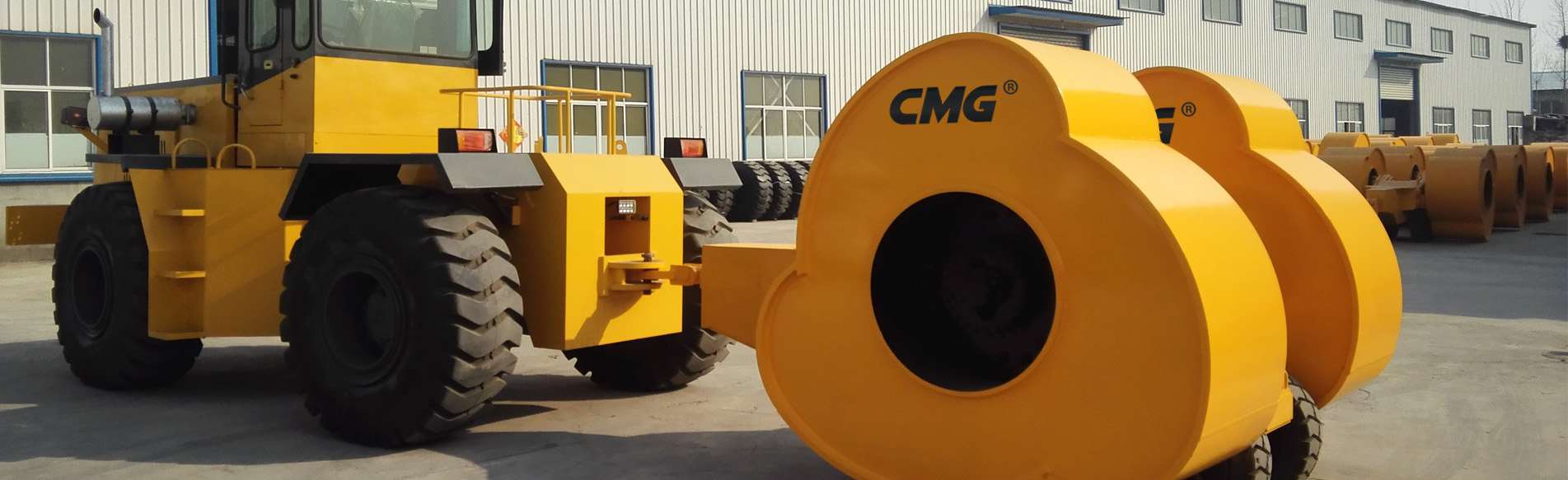
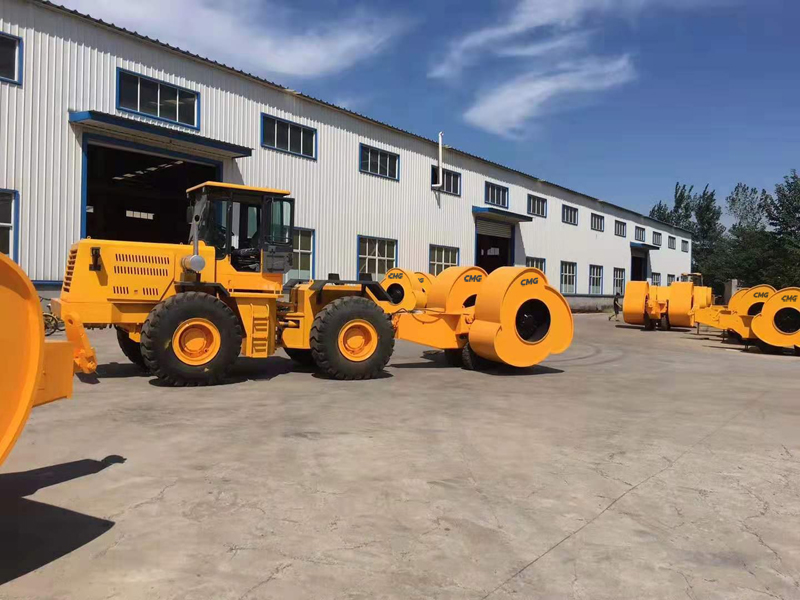
A surface roller can close the top of the fill, and that is exactly the trap: a crust forms, the surface looks acceptable, and the loose material below is left untouched. An impact drum delivers energy below that crust, collapsing voids in the placed fill and imposing a load far greater than the finished structure will impose. That load is what brings forward consolidation of the soft layer.
Staged treatment
Work on very soft ground usually proceeds in stages. The first passes are run slowly, at reduced energy, until the surface can carry the drum without it sinking. Once a working crust exists, speed and pass count go up to the production pattern. Where the fill is thick, treatment may be repeated after each placing stage rather than left to the end, because the drum can only reach so far into material that has not yet been placed.
Settlement is the point, so measure it
On reclamation the level survey is not paperwork; it is the evidence that the method is working. Record the surface level before treatment, after each pass, and at the end of the plot. Settlement that keeps accumulating pass after pass tells you the fill is still collapsing; settlement that has flattened out tells you additional passes are achieving little. Settlement plates, piezometers and, on soft boundary slopes, inclinometers are the instruments that let the geotechnical engineer judge whether the rate of loading is safe.
Stability before density
On a site bounded by water or by a slope, the first question is not how dense the fill can become but whether the ground can carry the drum at all. A heavy drum working near the edge of a soft fill can trigger a bearing failure or a slope failure. The sequence — slow first passes, treatment kept back from the edge, monitoring of pore pressure and movement — is a geotechnical decision, not an operator preference.
Services, piles and marine structures
Reclamation sites fill up with buried assets quickly: drains, ducts, pile caps, quay walls and newly installed piles. Impact energy travels through the ground and can damage or displace these. Piles that have just been driven are especially sensitive, and the usual rule is to complete ground treatment before piling, not after. Where treatment must follow construction, the distance, drum class and monitoring plan need to be agreed with the structural engineer.
Verification
Verification combines settlement records, density or penetration testing in the placed fill, and plate load testing where the treated surface will carry structures. On reclamation the records should also include the fill source and placing method for each plot, because the behaviour of hydraulic fill varies with the source and the way it was placed. A plot treated without that record cannot be compared with the next one.
Where the method reaches its limit
Impact rolling does not fix organic ground. Peat and highly organic silt compress by drainage and decomposition, and no amount of surface energy changes that; they need excavation, replacement or a ground improvement method designed for organic soils. Nor does it fix a fill that is saturated to the point where blows pump water. And it cannot create bearing capacity where the subsoil has none — it can only densify what is there and accelerate the settlement that the subsoil was going to produce anyway.
Planning inputs for a reclamation plot
- Fill type, source and placing method
- Thickness of placed fill and depth to the soft layer
- Groundwater and pore pressure conditions
- Target settlement or acceptance criterion
- Boundary conditions: water edge, slopes, quay walls
- Existing and planned buried assets and piles