Three methods get quoted for the same problem: soft ground that has to carry something heavier than it can now. They are not interchangeable, and the difference is not brand or price — it is how the energy reaches the soil.
Dynamic compaction: a pounder on a crane
A heavy pounder is lifted by a crawler crane and dropped onto a grid of points across the site. Each drop delivers a single large blow, and the craters are backfilled with granular material between passes. The method suits large open areas of loose fill, spoil and reclaimed ground where there is room for a crane to work and nothing fragile nearby.
Its weakness is the same as its strength: the energy arrives in discrete, very large blows. Vibration and noise travel, so working close to buried services, retaining walls or occupied buildings needs a different answer. The treated depth is set by pounder mass, drop height and the number of passes, and it is confirmed by testing, not by a brochure.
Rapid impact compaction: a mast on a carrier
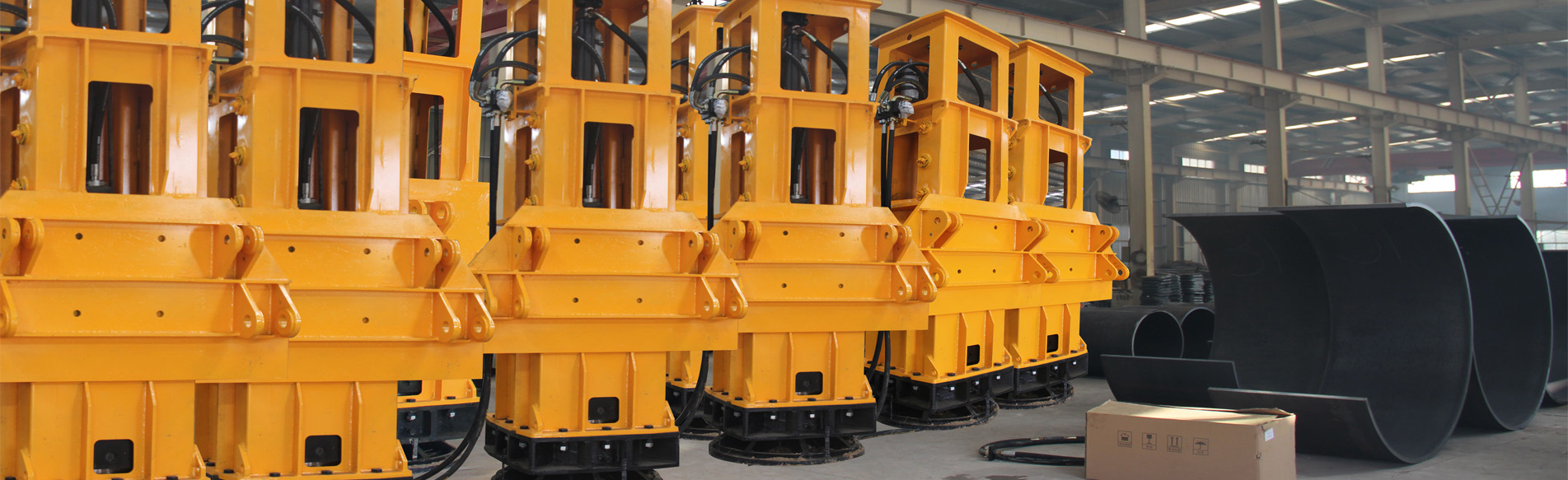
A rapid impact compactor carries its pounder on a mast mounted to an excavator base. The pounder is lifted and released at a high rate, striking a foot that stays in contact with the ground, so blows land in one place rather than in a grid of craters. It is faster to reposition than a crane and better suited to smaller or more confined areas, and it produces many smaller blows instead of a few large ones.
Because the foot stays on the surface, the method is often chosen where a crane cannot set up or where treatment must follow a linear alignment. It is still a dropped-mass method: the energy, the blow rate and the depth achieved all depend on the rig, and the result is verified the same way as dynamic compaction.
Impact rolling: a drum towed across the fill
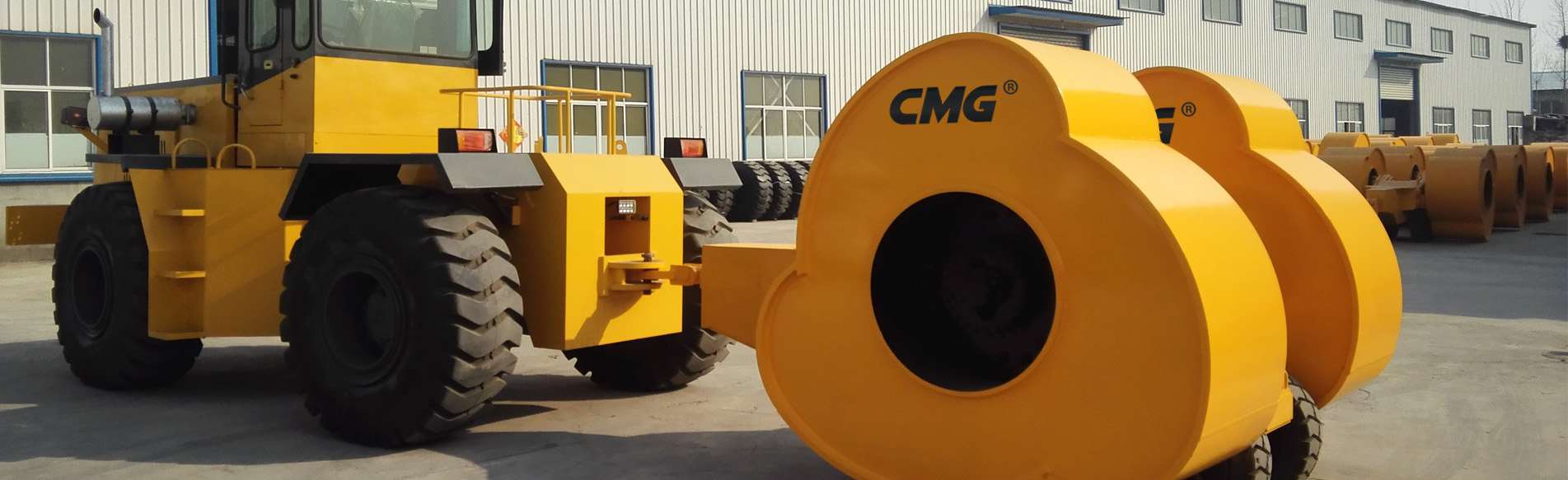
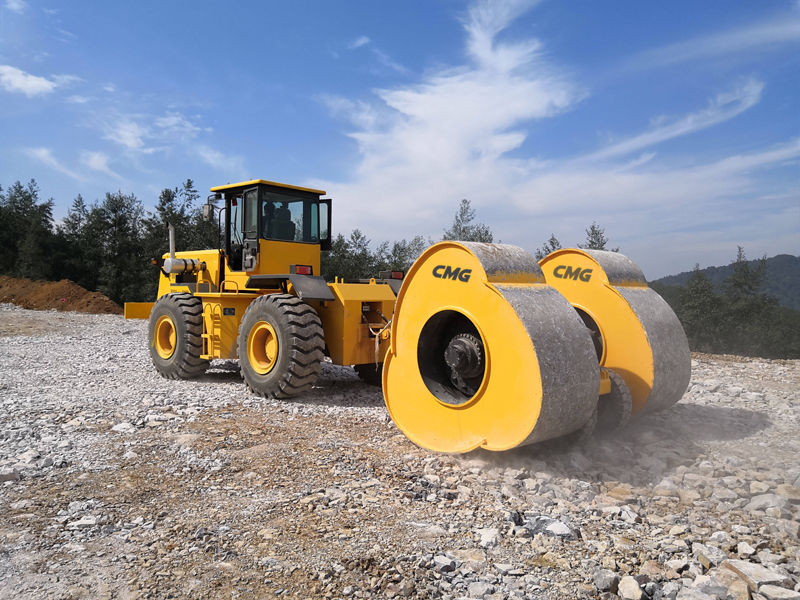
An impact roller is a non-circular drum towed at working speed. Every edge of the polygon strikes the surface as the drum rotates, so the blows are delivered continuously along the wheelpath instead of at a fixed grid. The machine is cheap to run, covers area quickly and works well on layered fill, haul roads and large platforms where the improvement required is in the upper metres rather than deep below them.
The limits are practical: it needs a tractor, a working speed that can be held, and enough room to turn. It works the surface it rolls on, so fill placed badly or in the wrong layer will not be rescued by more passes. Where the design asks for improvement far below the placed layer, or where the site is a confined pit, a dropped-mass method is the better fit.
Where CMG sits
CMG builds towed impact rollers in the 25–35 kJ classes and hydraulic compaction units that mount on excavators and wheel loaders. We do not build crane-mounted pounders or rapid impact compaction rigs, and this site does not sell them. Where a project needs one of those methods, the honest answer is that it needs a different supplier; where the improvement is in the upper layers and the site has room to roll, an impact roller is usually the cheaper way to get there.
How the choice is actually made
Depth. Ask the engineer what depth of improvement the design requires and what test proves it. If the answer is measured in metres below the placed layer, dropped-mass methods come first.
Area and access. Large open areas favour rolling for cost per square metre; confined sites and linear alignments favour a mast-mounted rig; a crane needs a working platform and a swing radius.
What is next door. Vibration limits near structures, services and residents can rule out dropped-mass work entirely, whatever the ground needs.
Verification.
Whichever method is chosen, the acceptance test is set before work starts: levels, density or penetration testing, plate load tests or proof rolling, each proving something different.What to send us
If you are comparing methods, send the required depth, the area and programme, the fill type, the nearest sensitive structure and the acceptance test. We will tell you whether an impact roller fits, and if it does not, we will say so rather than quote a drum that cannot do the job.
Inputs that decide the method
- Depth of improvement required by the design
- Area, shape and programme
- Fill type, source and placement
- Distance to structures, services and residents
- Access for crane, carrier or tractor
- Acceptance test and testing frequency