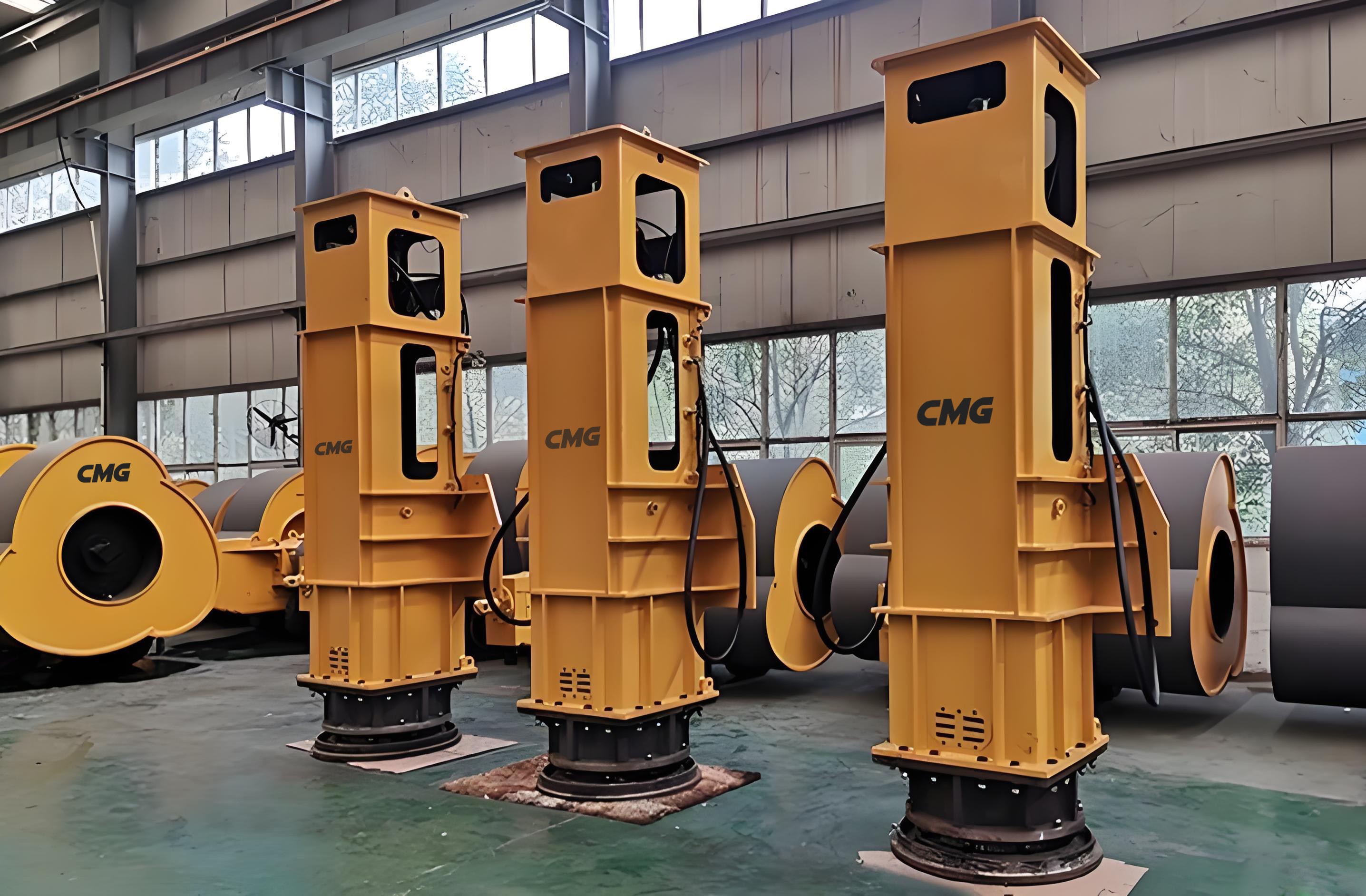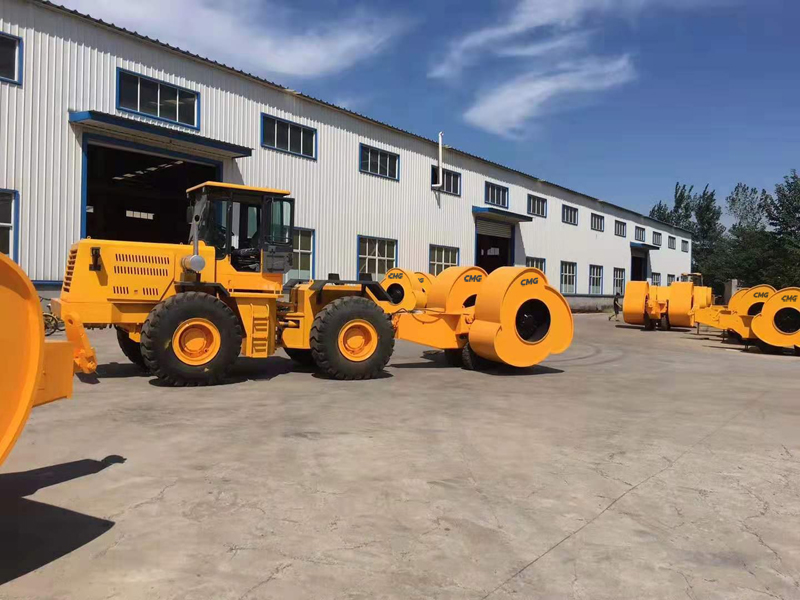
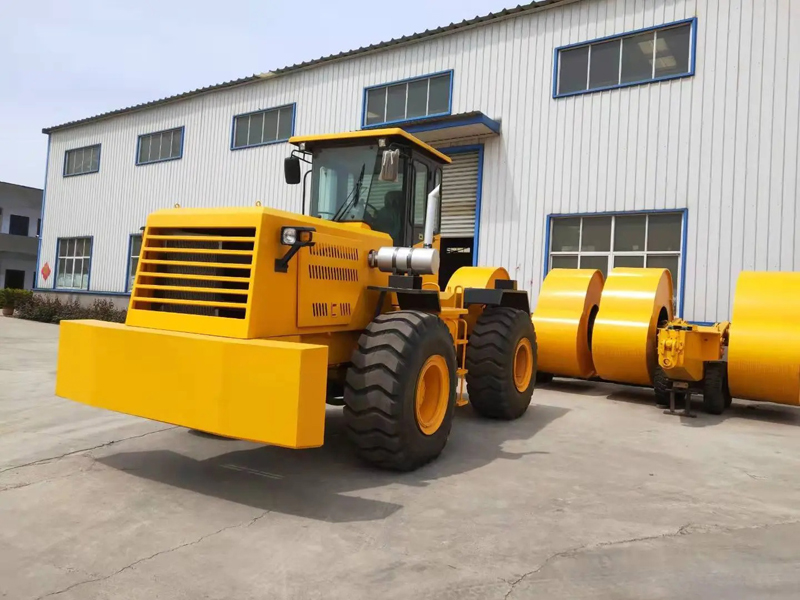
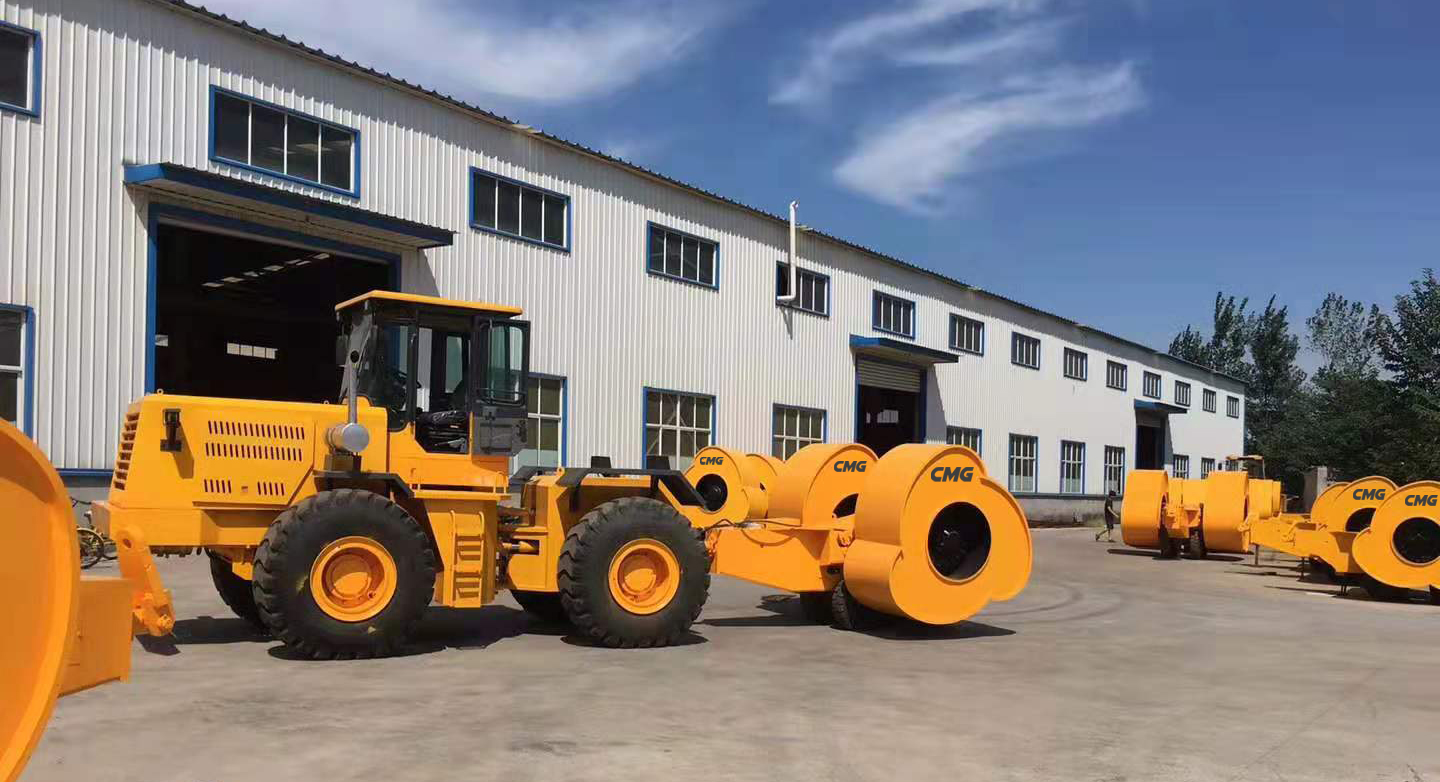
A tow-behind impact roller arrives as two machines, not one: a polygonal steel drum and a tractor heavy enough to pull it at working speed. The drum carries no engine. It hangs on a drawbar behind the tractor, and the tractor's traction decides whether the drum can be held at 10–15 km/h for the length of the pass. That speed is what sets the blow rate; a tractor that is too light lets the drum stall in soft fill and the energy of the blow goes into dragging the machine instead of densifying the ground.
Drum data we publish
The drums are quoted by impact energy, and the figures below are the manufacturer's published values for each class. Drum mass moves with the drum shape and with the options fitted, so a class can appear with more than one weight.
| Drum model | Impact energy | Drum shape | Operating weight | Overall dimensions (L × W × H) | Drum width | Tread |
|---|---|---|---|---|---|---|
| SD25T | 25 kJ | 3-sided | 11,600 kg | 3,840 × 2,980 × 2,200 mm | 900 mm | 1,180 mm |
| SD30T | 30 kJ | 3-sided | 16,000 kg | 3,820 × 2,980 × 2,360 mm | 900 mm | 1,180 mm |
| SD32T | 32 kJ | 3-sided | 16,500 kg | 3,880 × 2,980 × 2,480 mm | 900 mm | 1,180 mm |
| SL35T | 35 kJ | 3-sided | 14.5 – 18 t | 3,880 × 2,960 × 2,580 mm | 900 mm | 1,160 mm |
| 5YCT25 | 25 kJ | 5-sided | 13.8 – 16 t | 3,840 × 2,980 × 2,200 mm | 900 mm | 1,160 mm |
Working speed is 10–15 km/h, gradeability 25°, minimum outside turning radius 5,800 mm on the SL and 5YCT drums and 6,000 mm on the SD drums. The drums run hydraulic, nitrogen, spring and rubber-buffer damping, with accumulator pressure 3–4.5 MPa and tyre pressure 0.6–0.8 MPa. Effective compaction depth is published as 1.5–3 m: the figure that applies on a given site is established by trial rolling, because fill type, lift thickness and pass count all move it.
Tractor matching
The drum only performs when the tractor can hold the pass speed. The SD320 suits the 25 and 30 kJ drums; the SD380 is the heavier match for the 32 and 35 kJ drums and for soft fill where traction is lost early.
| SD320 | SD380 | |
|---|---|---|
| Operating weight | 14,000 kg | 16,000 kg |
| Rated power | 175 kW | 266 kW |
| Overall dimensions (L × W × H) | 6,110 × 2,820 × 3,350 mm | 5,975 × 2,750 × 3,320 mm |
| Traction force (I / II) | 126 kN / 106 kN | 126 kN / 106 kN |
| Travel speed (I / II / III) | 0–8.4 / 0–15.2 / 0–29 km/h | 0–8.4 / 0–15.2 / 0–29 km/h |
| Gradeability | 6% towing / 60% solo | 6% towing / 60% solo |
| Tyre size | 23.5-25-16PR | 23.5-25-16PR |
How the drum works in the fill
The drum face is a polygon rather than a circle, so each revolution lifts the drum and lets it fall: three blows per revolution on a three-sided drum, five on the five-sided version. The drum lands on a narrow face, and the blow is transferred down through the layer rather than spread across the surface. That is the reason the machine is used on deep fill and on ground that has already been rolled without reaching the required density.
The five-sided drum changes the rhythm rather than the energy. It delivers more, smaller blows per revolution, which suits fill that lifts and pumps under a large single blow, and it leaves a flatter surface behind. On rockfill and on stiff cohesive fill, the three-sided drum is normally the better match.
Applications
- Road and rail subgrade. Deep fill and cut-to-fill transition zones, where the density has to be reached below the depth a smooth-drum roller can influence.
- Rockfill and dam shoulders. Blows that break down the edges of placed rock and settle the layer before the next lift goes on.
- Reclaimed land and landfill base. Ground prepared for subsequent building, where settlement has to be controlled rather than merely surfaced.
- Airfield and yard platforms. Aprons, runways and container yards on deep granular fill.
Transport and site handling
The drum is raised hydraulically for road transfer, so it travels clear of the ground and the drawbar carries the load. One tractor handles one drum; a site that needs two energy classes can keep a single tractor and change drums, provided the tractor is matched to the larger drum. Buffered speed-increasing and quick-release drawbar pin are fitted as standard on the SD series.
What to fix before ordering
Three items settle the quotation: the drum class against the depth and fill, the drum shape (three- or five-sided), and the tractor that will pull it. Options such as the buffered speed-increasing system change the drum weight and are stated on the drawing. Where a machine is going into a fleet with existing drums, send the tractor model and the drum in service, and the match is checked against those figures rather than against a class number.
Figures on this page follow the manufacturer's published drum and tractor sheets. Where a site needs a verified figure for design work, ask for the drawing of the specific drum and tractor build.